Notable Books
Many books have been written about the Sons of the Pioneers, western music, and the people who have defined and contributed to it over the years. Here’s a list of some of our favorites.
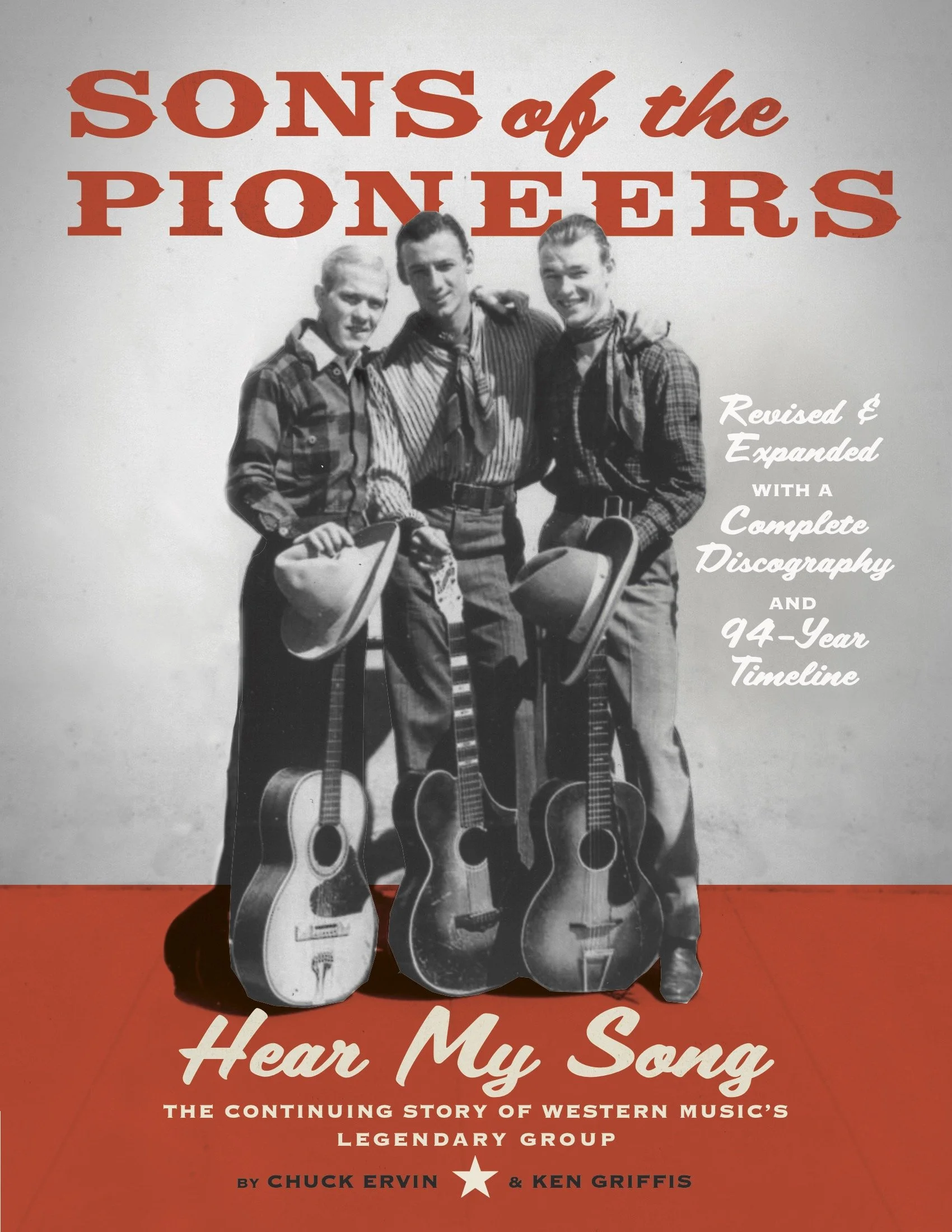
SONS OF THE PIONEERS: Hear My Song
The Continuing Story of Western Music’s Legendary Group
By Chuck Ervin and Ken Griffis
This is the long-awaited 10th edition of the 1974 book by Ken Griffiths.
Hear My Song was perhaps the first book written on the history of a musical group and from its inception has been the definitive reference on the storied history of this legendary group. This new edition has been carefully researched and greatly expanded, including:
Four new chapters and 13 sidebars of new content; 44 member biographies (20 new); nearly 300 photos, many published for the first time; a 94-year timeline with service dates of all members and their roles; a comprehensive discography, 1934-2026; a detailed list of compositions by the primary songwriters; a list of TV appearances and soundtracks; a detailed list of movie appearances and soundtracks.
Singing in the Saddle
The History of the Singing Cowboy
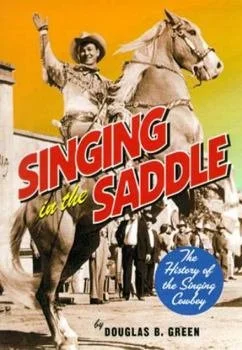
By Douglas B. Green
As the United States expanded west in the 1800s, and cattle became big business, the figure of the young brash cattleman who rode with the herds quickly emerged as a cultural icon. Victorian Americans went crazy for cowboys, snapping up dime-store novels and sheet music, and turning out in droves for Buffalo Bill Cody's Wild West Show. It was only a matter of time before someone brought together these three facets-entertainer, singer, and cowboy. And when Carl T. Sprague recorded the first hit cowboy record ("When the Work's All Done This Fall") in 1925, the singing cowboy as we know him was born.
A singing cowboy himself, Douglas B. Green (better known as Ranger Doug from the Grammy-award-winning group Riders In The Sky) is uniquely suited to write the story of the singing cowboy. He has been collecting information and interviews on western music, films, and performers for nearly thirty years. In this volume, he traces this history from the early days of vaudeville and radio, through the heyday of movie westerns before World War II, to the current revival. He provides rich and careful analysis of the studio system that made men such as Gene Autry and Roy Rogers famous, and he documents the role that country music and regional television stations played in carrying on the singing cowboy tradition after World War II.
This book, lavishly illustrated with over 140 photos, is a wealth of information that comes out of decades of research. Green has unearthed never-before-published photos and rare movie posters-including one from an all-Black western, Harlem on the Prairie (1938). Through his close friendships with other singing cowboys and their families, Green is able to provide rare insights into the ways that some like Autry became stars and others like Raoul Walsh (who lost his eye in a shooting accident and later became a famous director) did not.
Green also traces the history of cowboy music, from popular songs such as "Sweet Betsy from Pike" to the instantly recognizable harmonies of the Sons of the Pioneers. Green even speculates about just when the famous yodel became a ubiquitous part of the singing cowboy's repertoire. More important, Green reveals how the imagery of the singing cowboy has become such a potent force that even now country musicians don cowboy hats so as to symbolically take part in the legend. Nowhere has the recorded history of the singing cowboy and the film history been collected in one volume, and this book is sure to become the resource for students of the style.
Co-published with the Country Music Foundation Press
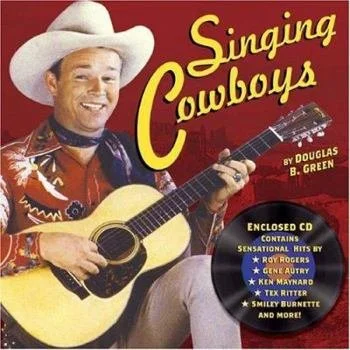
Singing Cowboys
By Douglas B. Green
Singing Cowboys tells the fabled story of the men and women who shone brightly during the magical era of the singing cowboy movie star. It was an era when Western heroes sang and yodeled as well as threw punches and drew six-guns; an era where for a time nearly half the Western films churned out in Hollywood's golden age either featured a singer as a hero, or had singing second leads or singing ranch hands to provide that dreamy, romantic, exquisitely beautiful music we now think of as western.