Listening Companion
for
SONS OF THE PIONEERS: HEAR MY SONG
The Continuing Story of Western Music’s Legendary Group
Chapter 1: 1931-1933
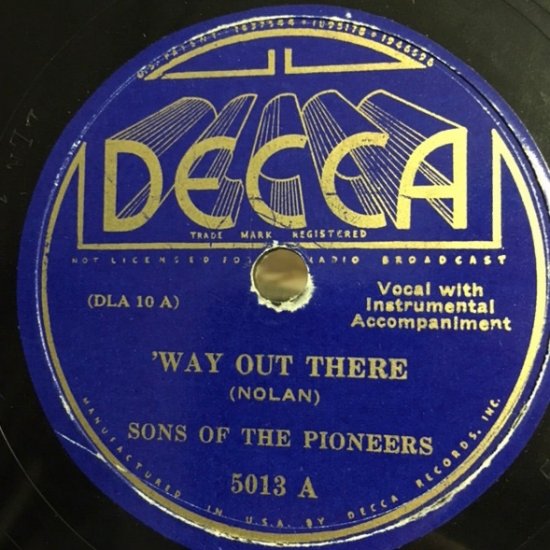
“Way Out There” recorded August 8, 1934, on Decca Records, showcasing the Sons of the Pioneers’ captivating new three-part harmony yodeling technique. This was the group’s very first commercial recording.
Personnel: Leonard Slye (middle vocal, guitar), Bob Nolan (baritone vocal), Tim Spencer (tenor vocal), Hugh Farr (fiddle).
Chapter 2: 1934-1935
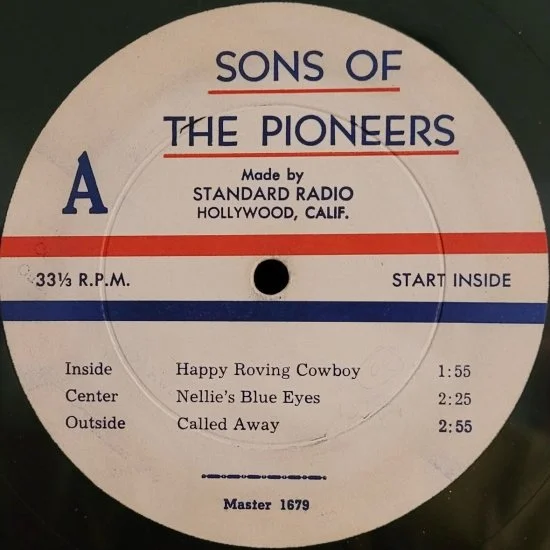
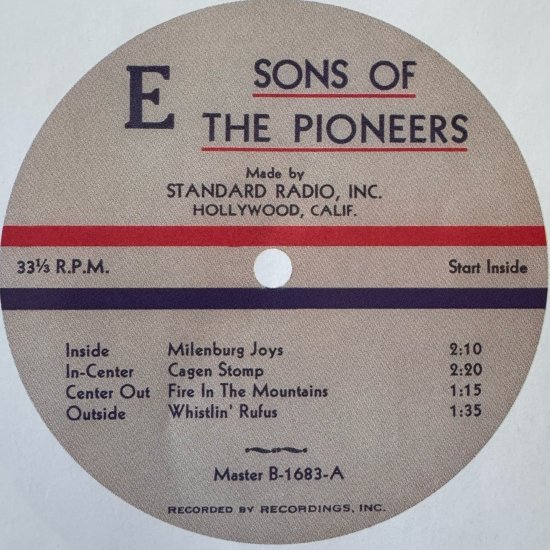
Two recordings from the group’s influential Standard Radio transcriptions:
“Happy Roving Cowboy (Happy Cowboy)” from August 1934, with Leonard Slye (middle vocal, guitar), Bob Nolan (baritone vocal, bass), Tim Spencer (tenor vocal), and Hugh Farr (fiddle).
“Cagen Stomp (Cajon Stomp)” from October 1936, an instrumental featuring Hugh Farr (fiddle) and Karl Farr (guitar), backed by Leonard Slye (guitar) and Bob Nolan (bass) and billed as the Cornhuskers.
Chapter 3: 1936
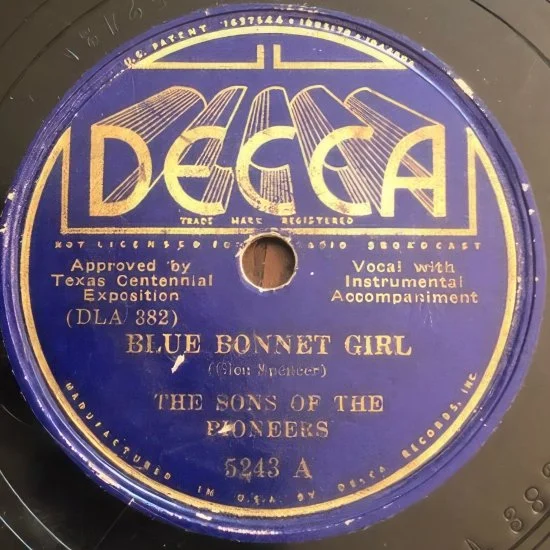
“Blue Bonnet Girl,” recorded by the Pioneers June 18, 1936, for Decca Records. This song was composed by Glenn Spencer, Tim Spencer’s older brother, who played an early role in the group not only as a songwriter but also as an arranger. Many of the group’s rehearsals were held at his home in South Los Angeles.
Personnel: Leonard Slye (middle vocal, guitar), Bob Nolan (baritone vocal, bass), Tim Spencer (tenor vocal), Hugh Farr, fiddle.
Chapter 4: 1937-1944
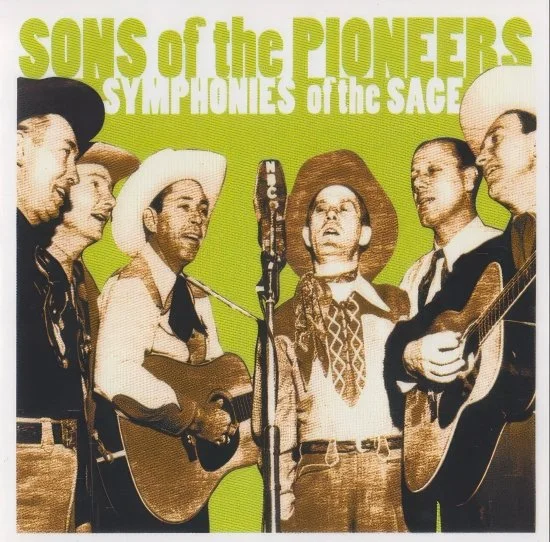
“There’s a Rainbow Over the Range,” recorded in March 1941 as part of the Orthacoustic Symphonies of the Sage radio transcription series. From February to June 1941, the Pioneers recorded more than 200 songs for this popular series.
Personnel: Bob Nolan (baritone vocal), Tim Spencer (middle vocal), Lloyd Perryman (tenor vocal, guitar), Hugh Farr (fiddle), Karl Farr (guitar), Pat Brady (bass).
Chapter 5: 1945-1948
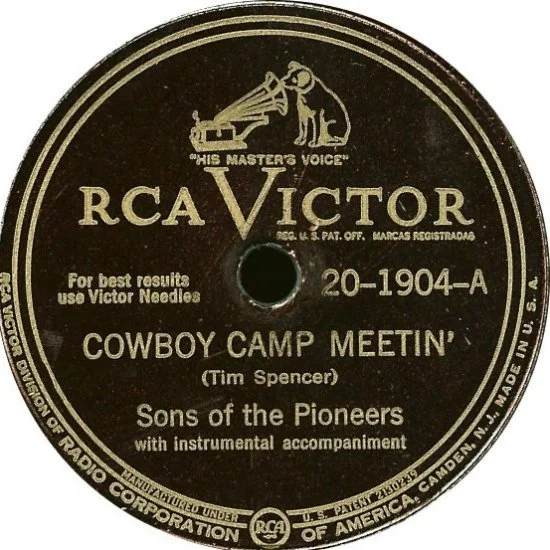
“Cowboy Camp Meetin’,” a popular Tim Spencer gospel composition, recorded March 15, 1946. This recording features the melodious tenor of Ken Carson, who was the wartime replacement for Lloyd Perryman, and the mellow bass of Hugh Farr, whose singing earned him the nickname “Foghorn.”
Personnel: Ken Carson (tenor vocal), Bob Nolan (baritone vocal), Tim Spencer (middle vocal), Hugh Farr (bass vocal, fiddle), Karl Farr (guitar), Pat Brady (bass). Others: T. Gibson, R. Call (violin), L. Paonessa (drums), E. Bennett (piano), R. Miele (steel guitar).
Chapter 6: 1949-1954
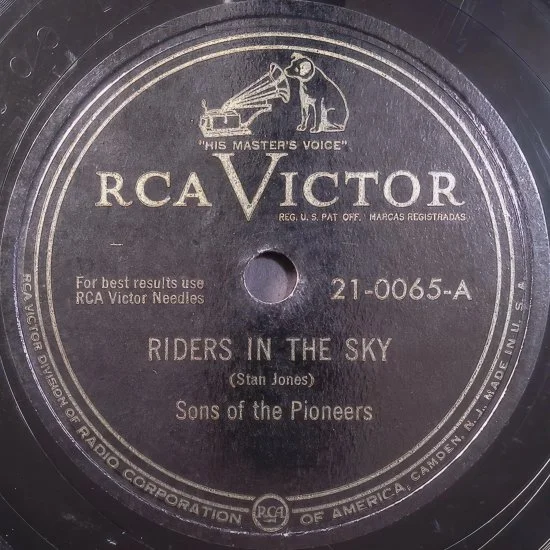
“(Ghost) Riders in the Sky,” Stan Jones’s most famous composition, recorded by the Pioneers on April 28, 1949. Bob Nolan had originally rejected the song because he thought the melody was too similar to that of “When Johnny Comes Marching Home.”
Personnel: Ken Curtis (middle vocal), Bob Nolan (baritone vocal), Lloyd Perryman (tenor vocal), Hugh Farr (fiddle), Karl Farr (guitar), Pat Brady (bass). Others: Milton Deluge (session leader, accordion), Joaquin Murphey (steel guitar).
Chapter 7: 1955-1969
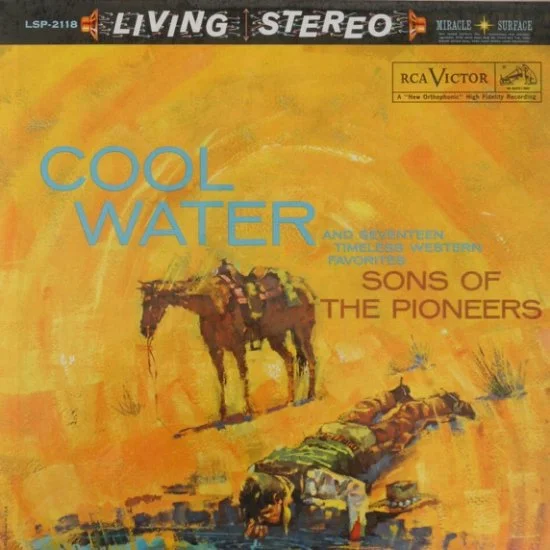
“Cool Water,” from the Pioneers’ 1960 album of the same name. Recorded at RCA Studios in Hollywood June 16-17, 1959, the track was chosen for the Grammy Hall of Fame in 1986.
Personnel: Lloyd Perryman (tenor vocal), Tommy Doss (baritone vocal), Dale Warren (middle vocal), Karl Farr (guitar), George Bamby (accordion). The studio orchestra, directed by Darol Rice, included a string section, distinctive French horn, and drums, plus Neil LeVang on guitar. Shortly before this recording, Bamby had joined the Pioneers as a replacement for Hugh Farr.
Chapter 8: 1970-1977
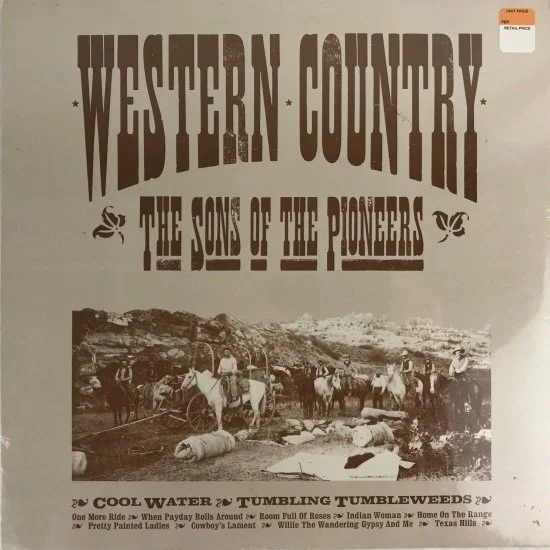
“Home on the Range,” recorded May 14, 1976, for Granite Records in Hollywood, and released on the group’s Western Country LP later that year. This setting provides an excellent opportunity to feature the group’s three-part harmony yodeling. Also, each member of the vocal trio takes a solo (Dale Warren first, then Lloyd Perryman and Rusty Richards), so this is a great opportunity to appreciate each singer’s distinctive vocal gifts.
Personnel: Billy Liebert (session leader, accordion), Lloyd Perryman (middle vocal), Dale Warren (baritone vocal), Rusty Richards (tenor vocal), Roy Lanham (guitar). Others: Tommy Morgan (harmonica), Al Vescovo (guitar, dobro), Curtis Stone (bass), Archie Francis (drums), Bobby Bruce (violin), Jimmy Wyble (guitar).
Chapter 9: 1978-1983
“Call of the Wild,” written by Rusty Richards, from Celebration (1982).
Personnel: Dale Warren (baritone vocal), Luther Nallie (middle vocal), Rusty Richards (tenor vocal, guitar), Roy Lanham (guitar), Dale Morris (fiddle). Others: Margie “Fiddlin’ Kate” Warren (fiddle), G. Peters (guitar), G. Daniel (keyboard), S. “Cactus” moser and J. Scanlon (drums), C. LeRoux (percussion), plus The OK Chorale.
Chapter 10: 1984-1999
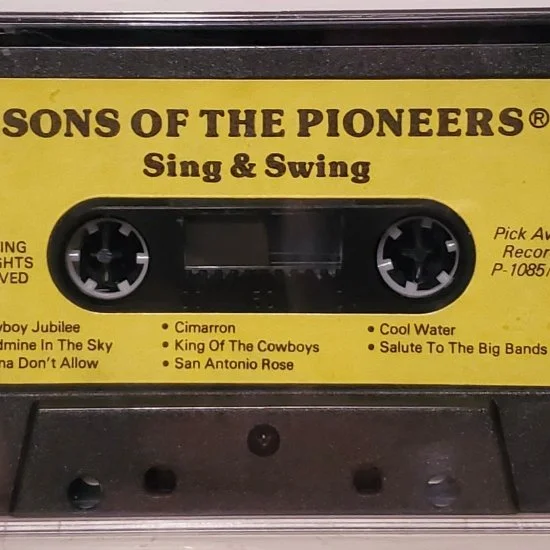
“Tribute to the Big Bands,” featuring horns and reed instruments, from Sing & Swing (1989).
Personnel for all Sing & Swing recording sessions: Dale Warren (baritone vocal), Luther Nallie (bass, middle vocal, sax, rhythm guitar), Sunny Spencer (middle vocal, guitar, banjo, die, sax, clarinet, trumpet, jug, mandolin), Gary LeMaster (tenor vocal, lead guitar, trumpet, trombone), David Bradley (harmony and lead vocals), Daryl Wainscott (keyboard synthesizer, vocals).
Chapter 11: 2000-2008
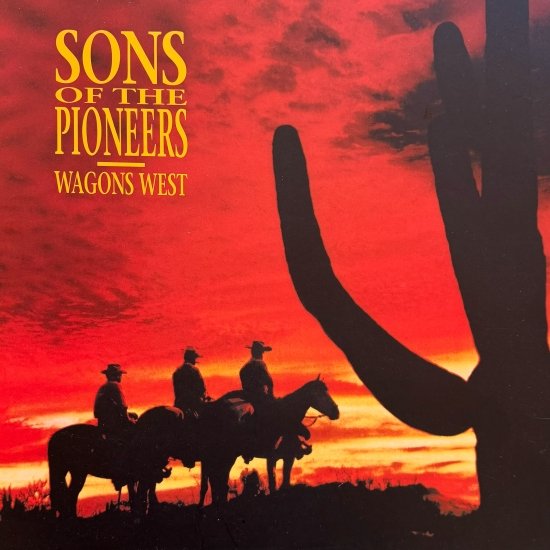
“Wind,” a haunting Bob Nolan composition recorded by RCA on October 17, 1947. This take had not been issued until Bear Family Records released its Wagons West box set (1993), one of many retrospective record collections released between 1980 and 2010.
Personnel: Bob Nolan, Tim Spencer, Lloyd Perryman, Ken Carson (vocals), Hugh Farr (fiddle), Karl Farr (guitar), Pat Brady (bass). Others: D. Bohme (session leader, violin), C. Hurter, S. Turner, G. Kayser (violin), J. Colvard (steel guitar), A. Klein (accordion).
Chapter 12: 2009-2025
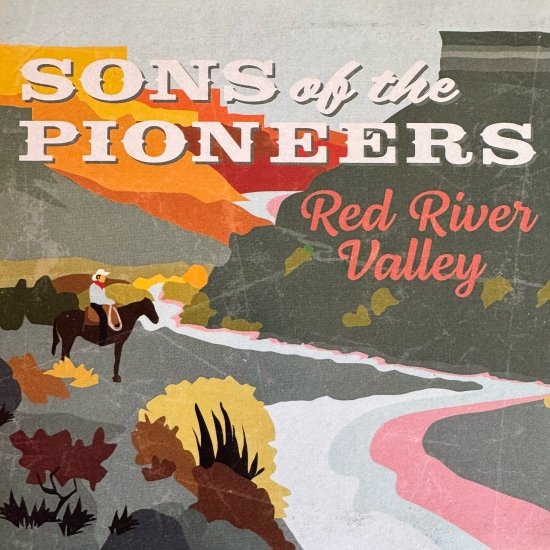
“Blue Shadows on the Trail,” from Red River Valley (2022). Dusty Rogers, son of the Pioneers’ founding member Roy Rogers, sings the lead on this one.
Personnel: Dusty Rogers (middle vocal), John Fullerton (baritone vocal, rhythm guitar), Ken Lattimore (tenor vocal), Tommy Nallie (lead guitar, harmony vocal), Paul Elliott (fiddle, harmony vocal), Chuck Ervin (bass).
Chapter 13: 2026
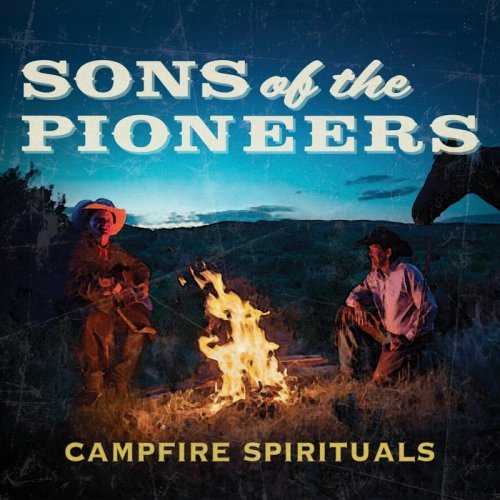
“The Land Beyond the Sun,” from Campfire Spirituals (2024).
Personnel: Tommy Nallie (middle vocal, lead guitar), John Fullerton (baritone vocal, rhythm guitar), Ken Lattimore (tenor vocal), Paul Elliott (harmony vocal, fiddle), Chuck Ervin (bass vocal, bass).